

Backyard Fruit Pollination.
Made Simple.
Pure, hand-collected pollen to help
maximize your tree’s fruit potential
Why Fruit Trees Bloom But Don’t Produce Fruit
Many backyard trees struggle with at least one of these
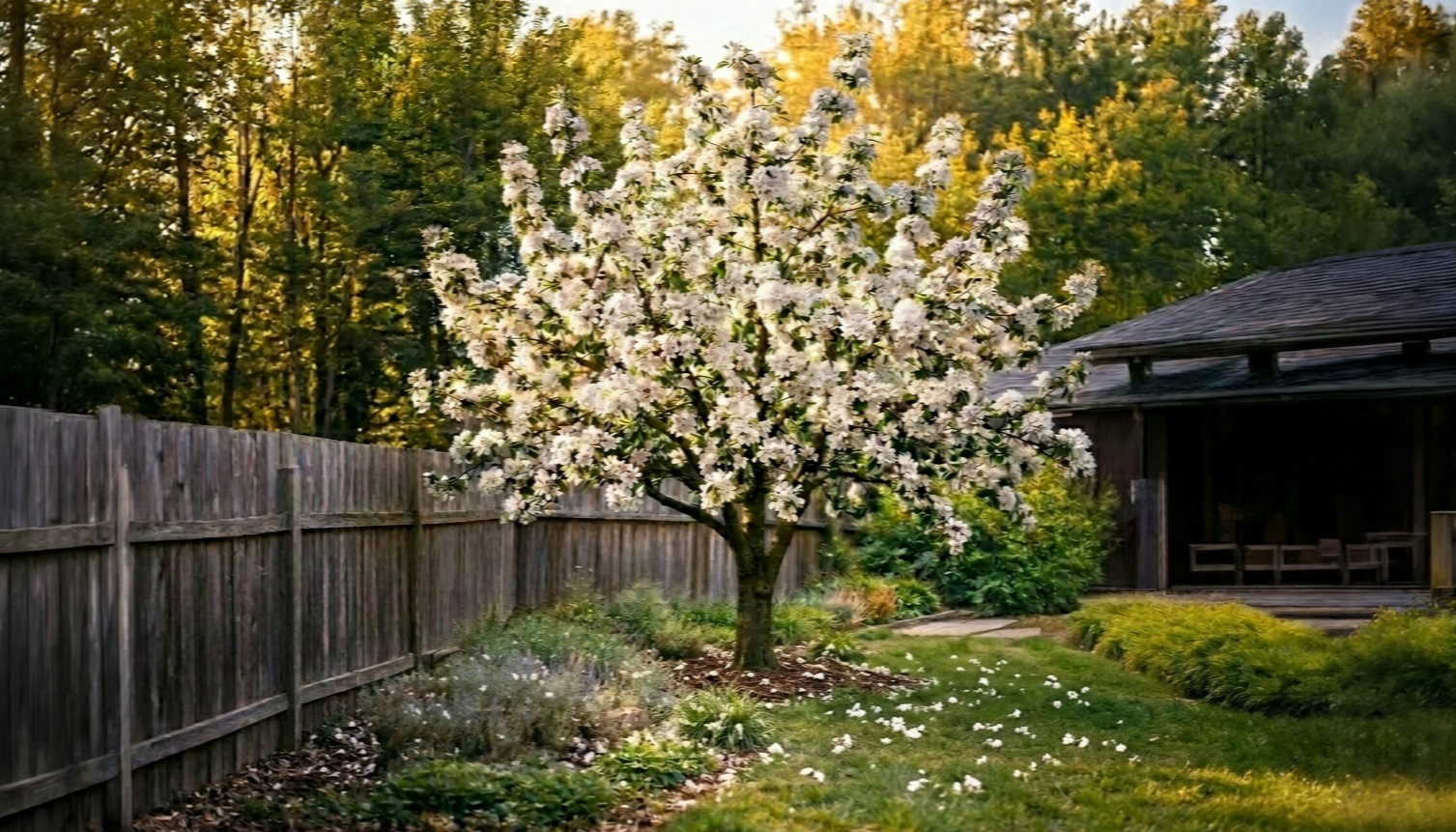
Lack of Pollinizers
Many fruit trees need pollen from a different variety to produce fruit. Without one nearby, blossoms may not develop into fruit.
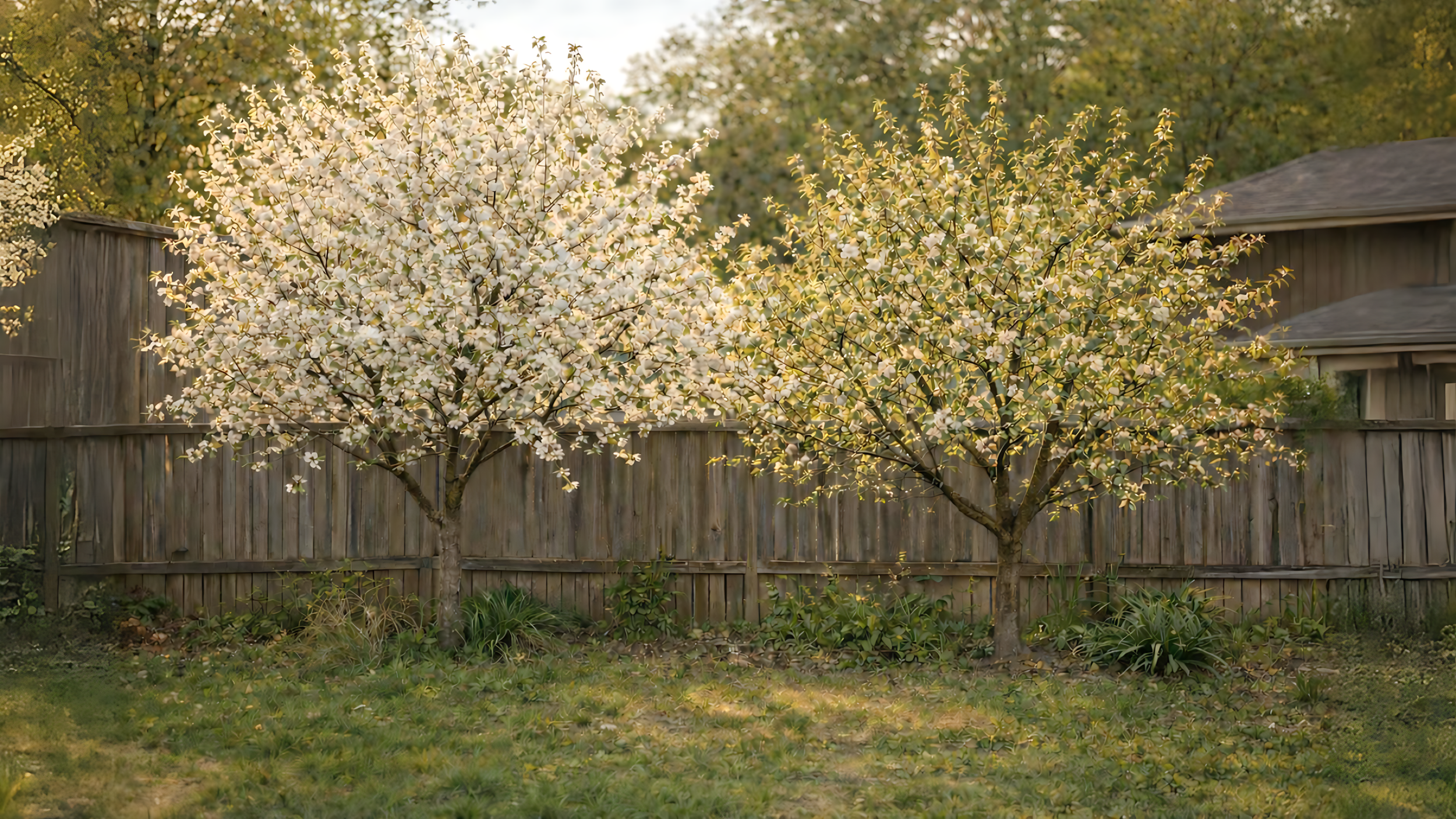
Bloom Timing Mismatch
If trees bloom at different times, pollination may not occur—resulting in little to no fruit production.
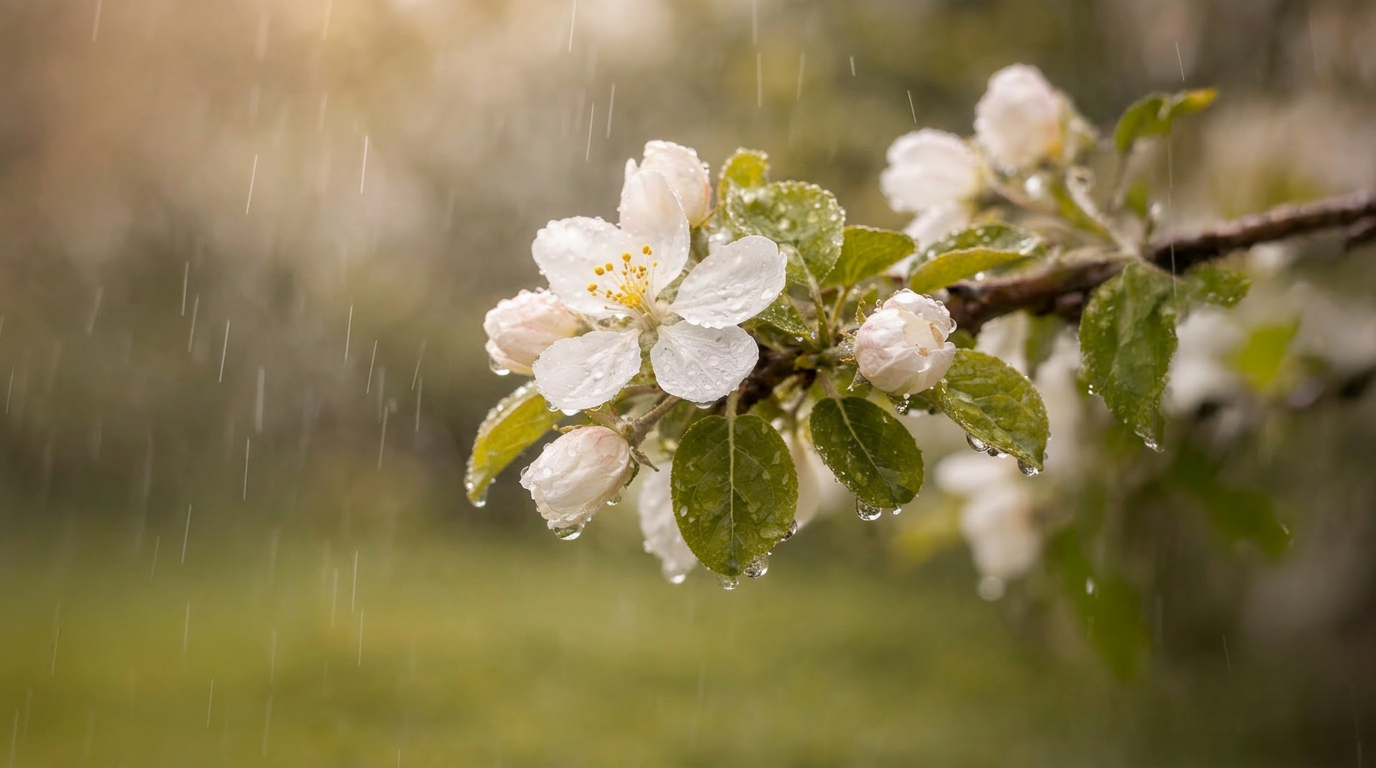
Poor Spring Conditions
Rain, wind, or cold can limit bee activity—reducing pollination and overall fruit production.
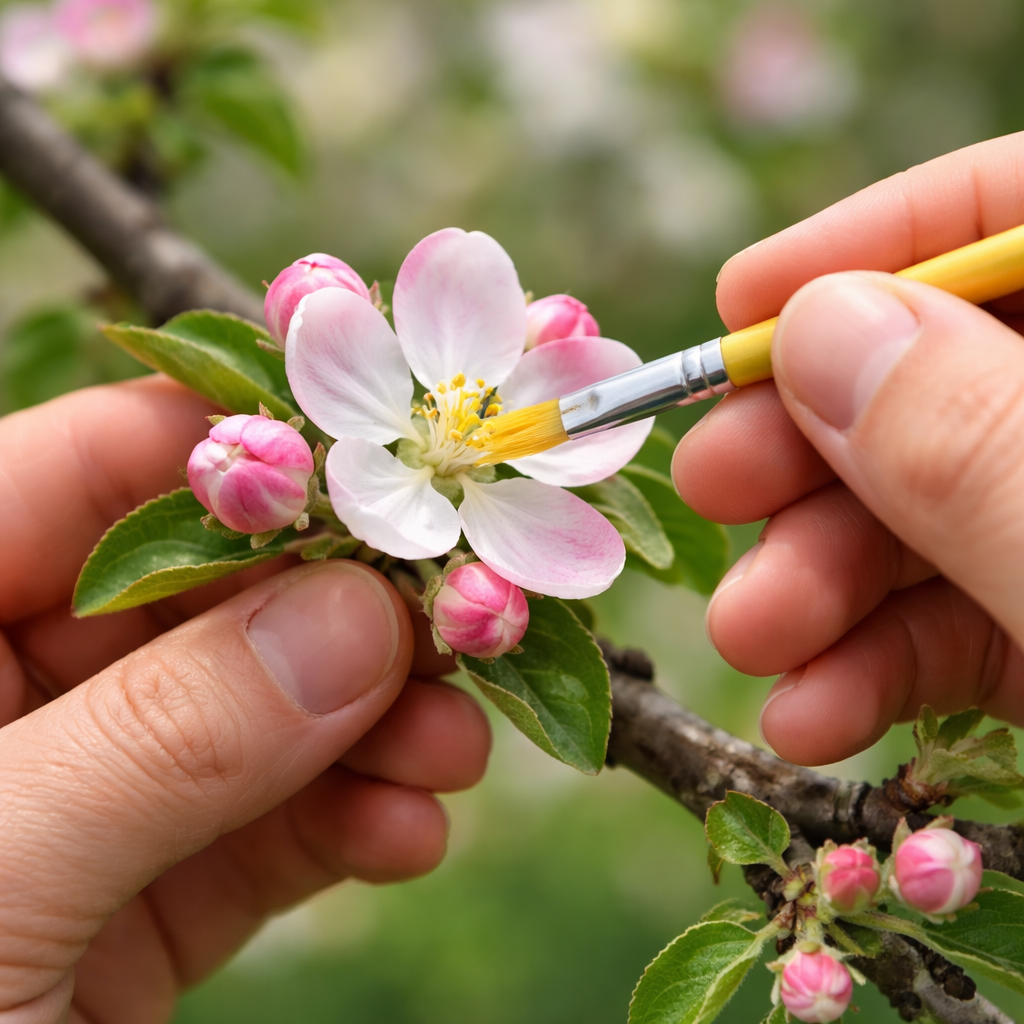
A Simple Way To Improve Pollination
Supplemental pollen helps when natural pollination falls short—giving your trees a better chance to produce consistent, healthy fruit..
Works when natural pollination is limited
Targets blossoms directly to improve pollination.
The same pollen used by commercial fruit growers.
What You Get
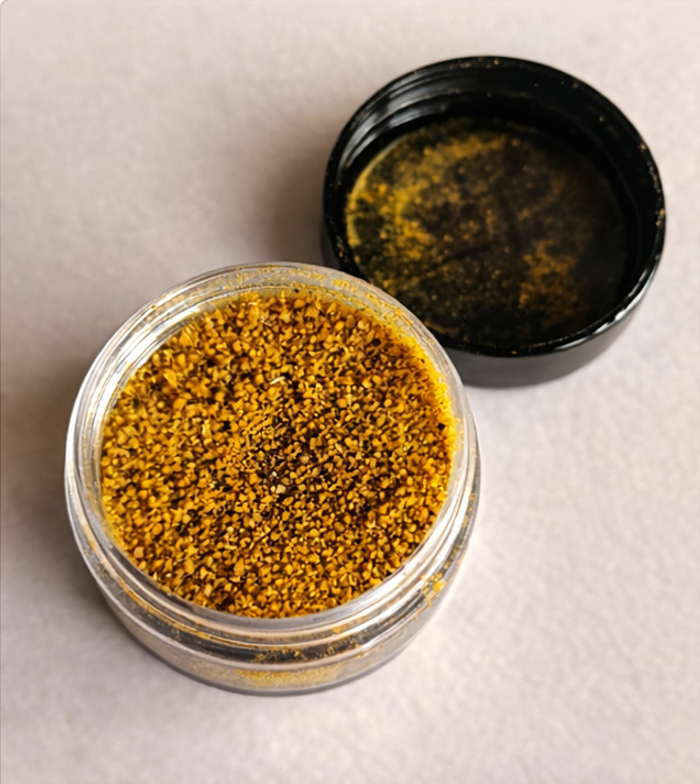
High-Quality Pollen
✓
Commercial-grade pollen, hand-collected and tested for high-viability.
Backyard-Friendly Size
✓
5g container—enough for 1-2 seasons for most backyard trees.
Properly Stored & Shipped
✓
Dry pollen, sealed and ready
for hand application.
Backed by 17+ Years of Commercial
Pollination Experience
✓
How It Works
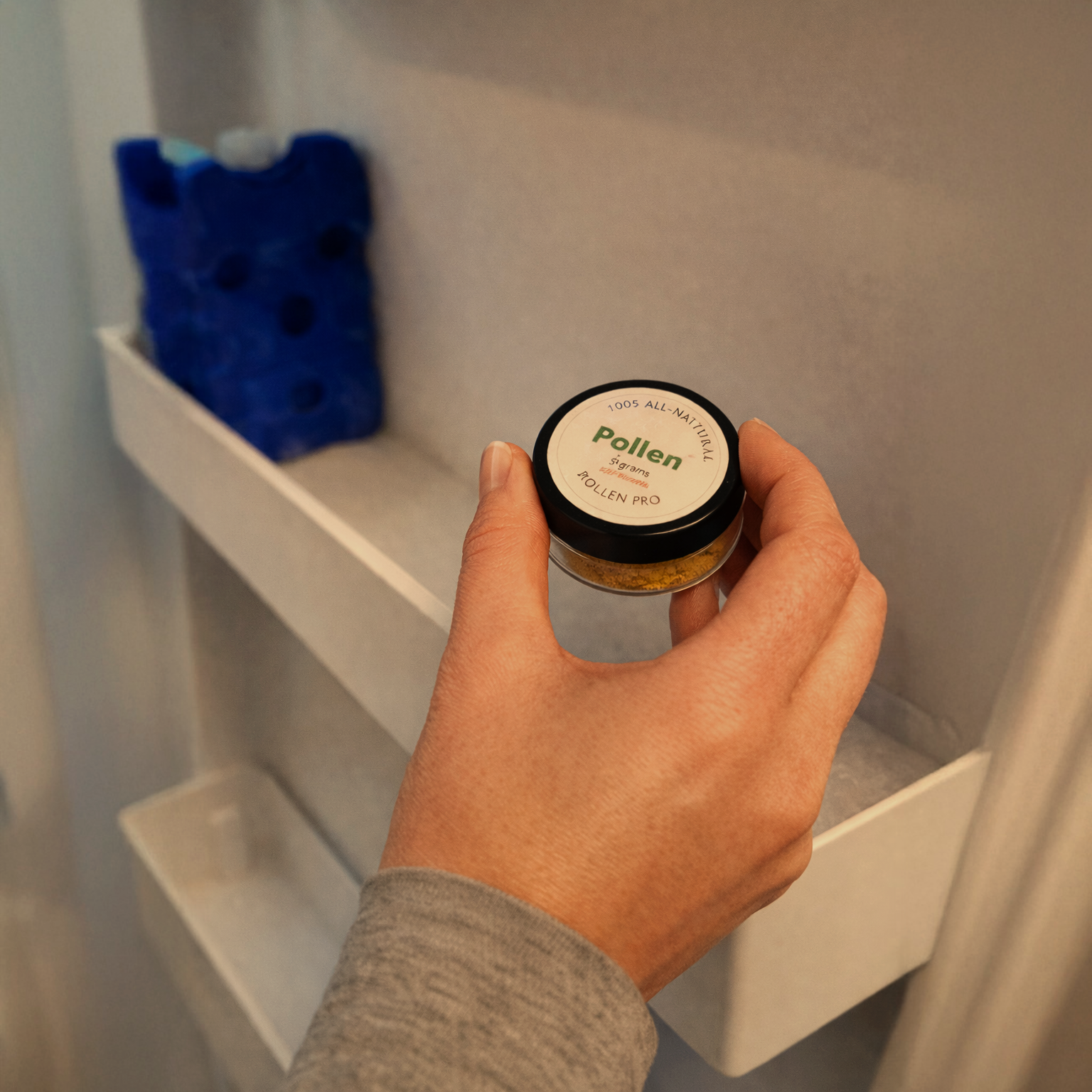
1. Store Pollen
Store pollen in your freezer immediately upon arrival to maintain viability.
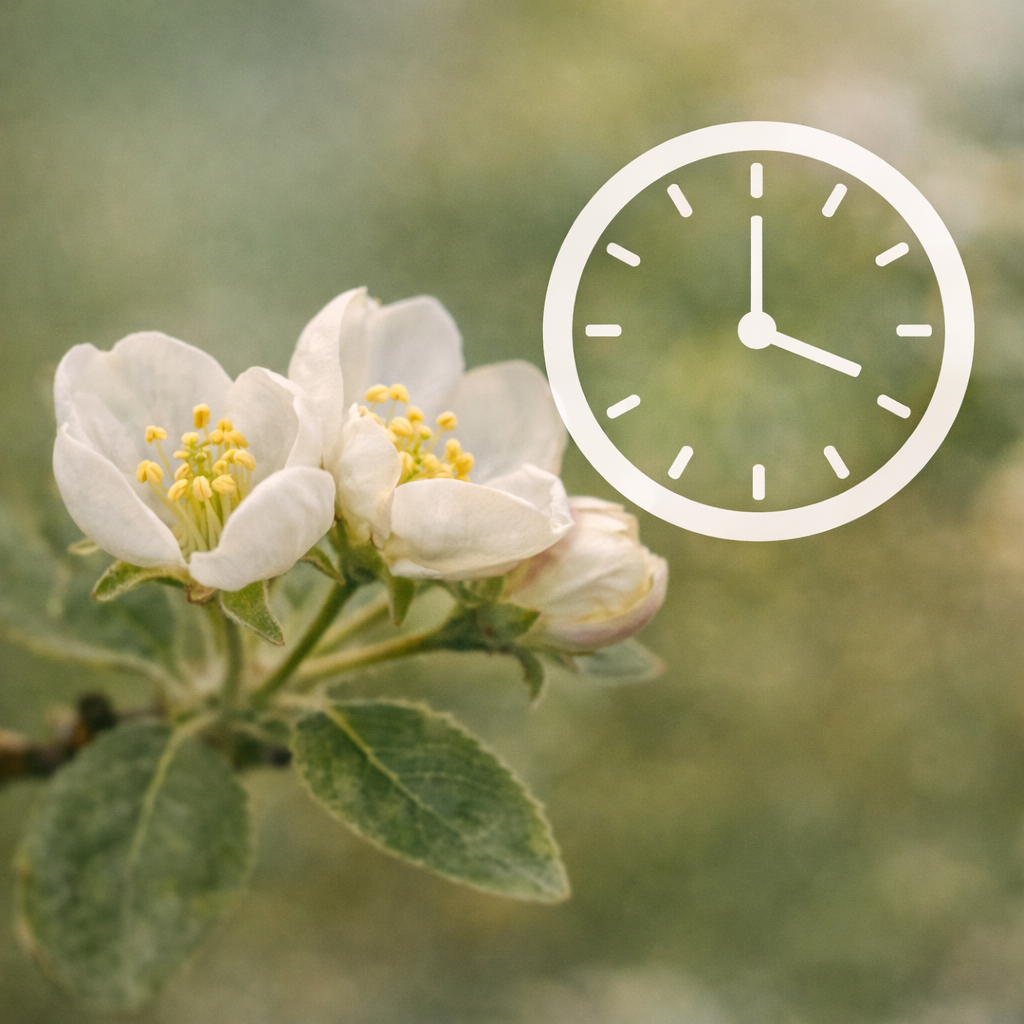
2. Time Your Application
Begin at 30-40% bloom.
Apply again at 70-80% bloom.
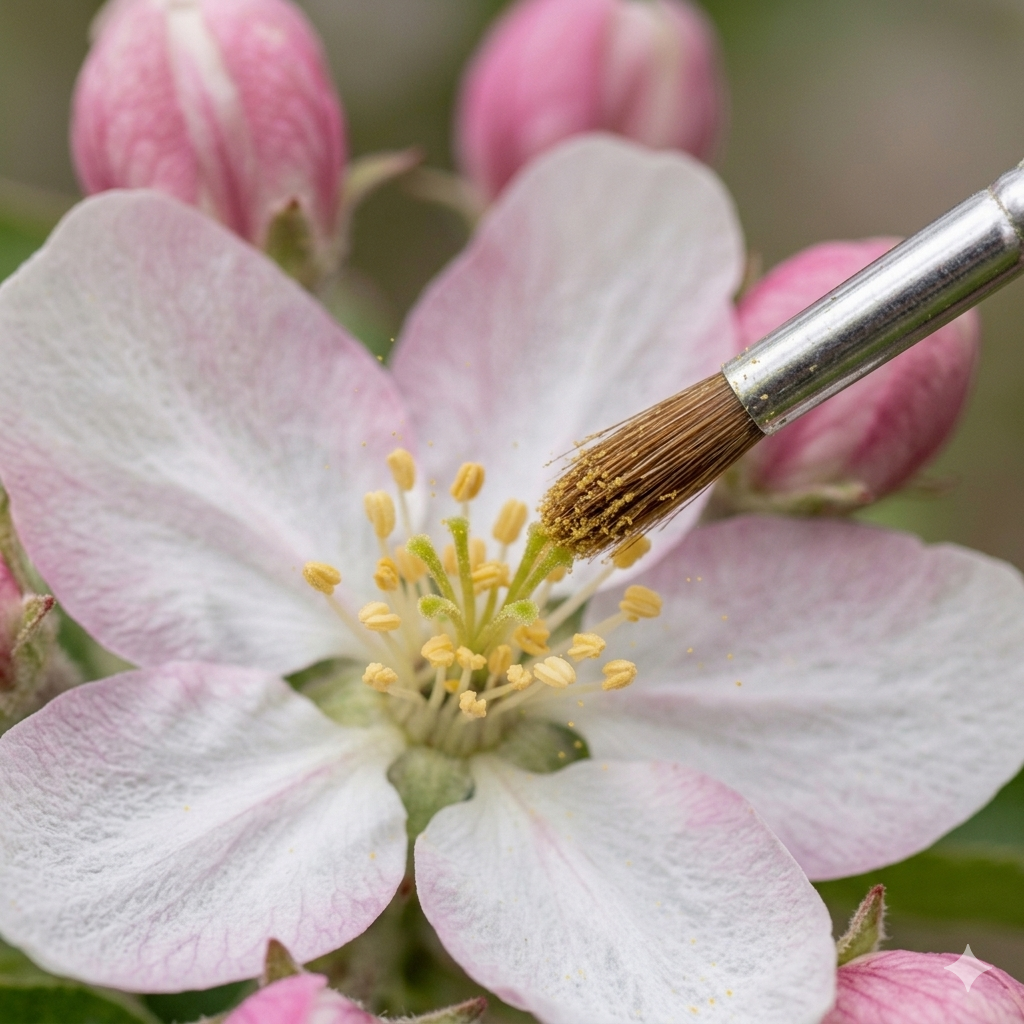
3. Apply to Stigma of Flowers
Use a small brush to apply pollen directly to the stigma.
Important: Timing Is Critical
Applying pollen too late—when all flowers are fully open—will not be effective because the stigmas are no longer receptive.
Apply in dry conditions above ~55°F.
How To Order
Getting pollen for your backyard trees is simple.
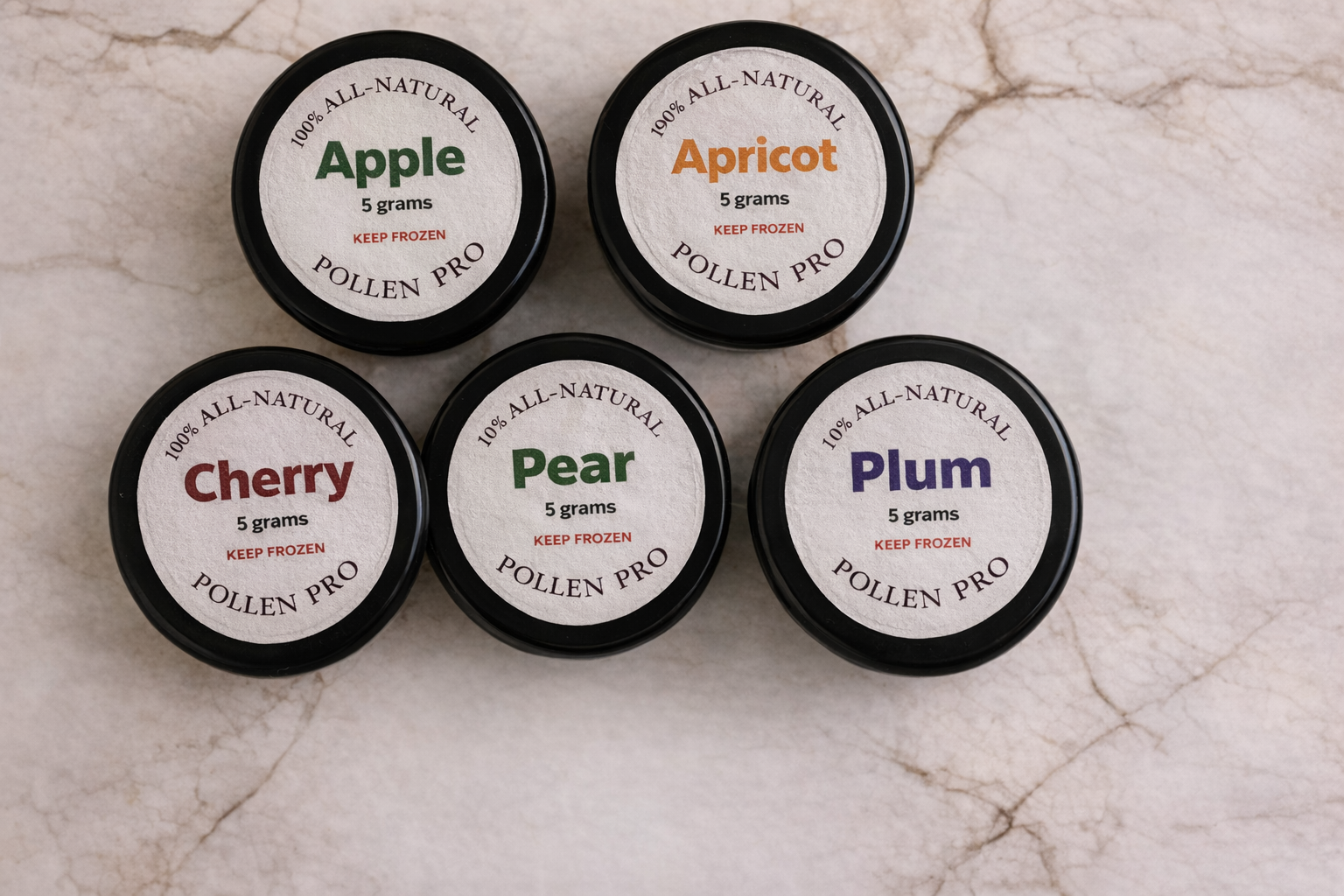
1 Choose Your Fruit Type
Pick the pollen that matches your tree
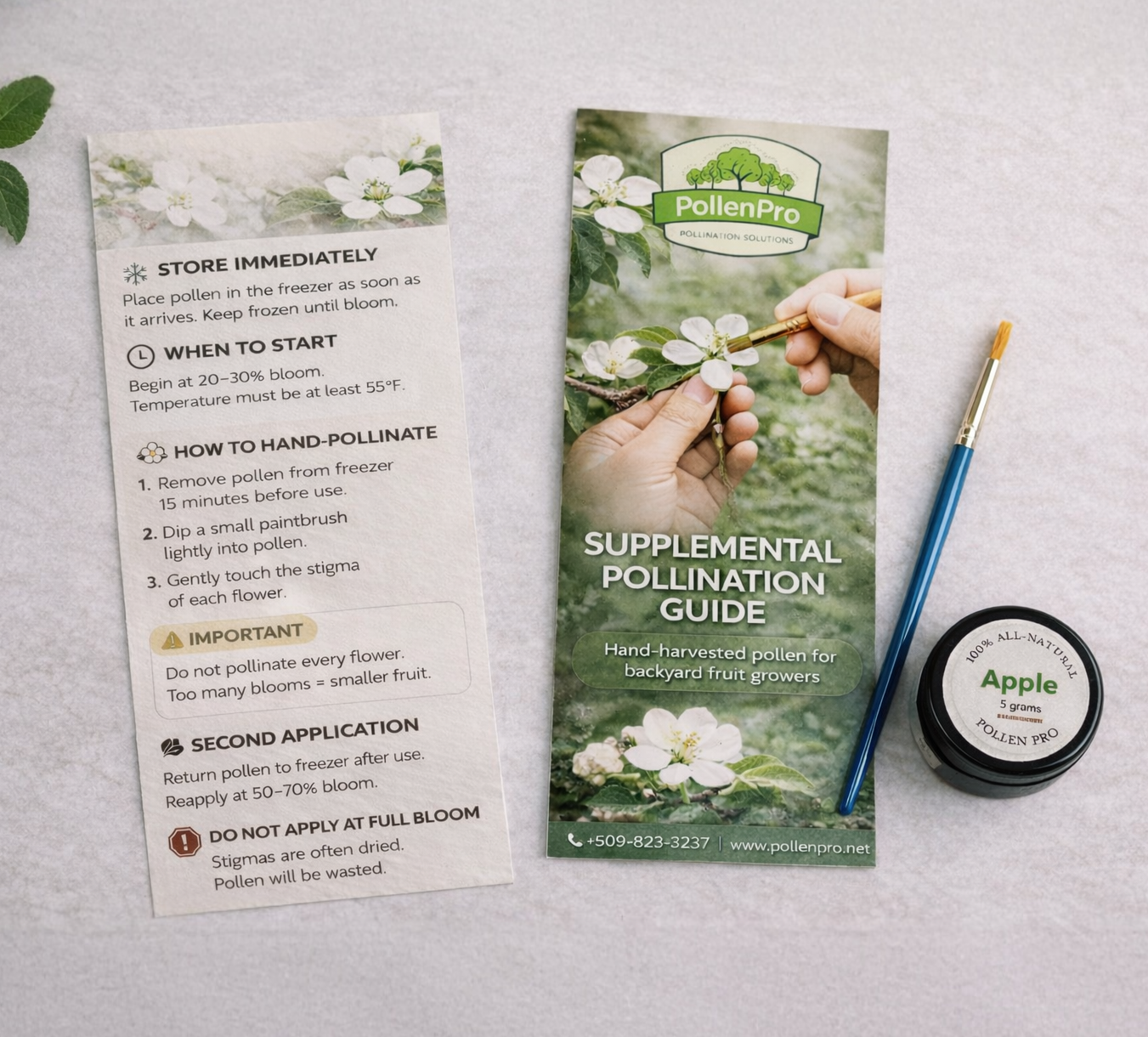
2 Place Your Order
Choose the quantity you need—each container includes 5g of pollen, ideal for backyard trees.
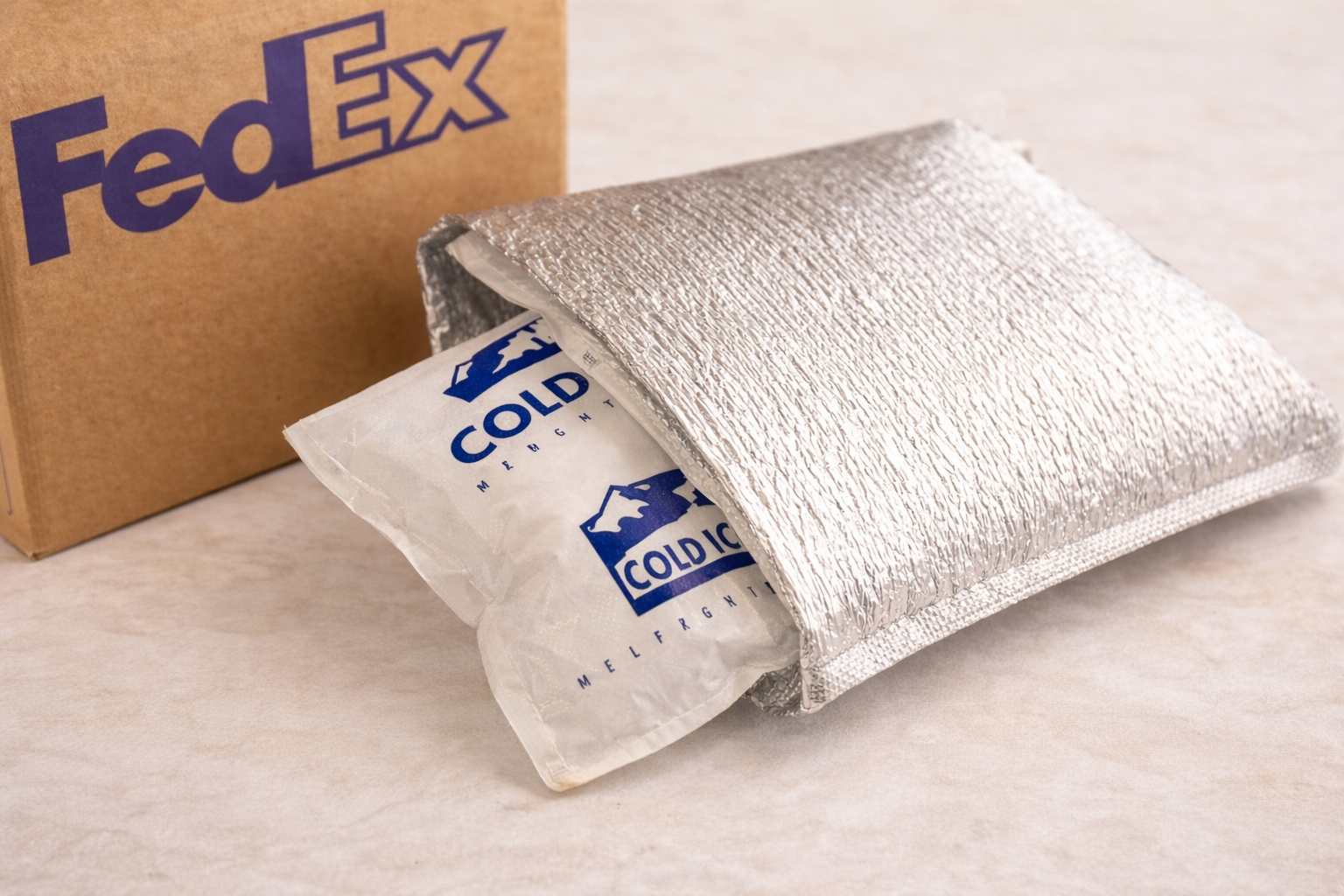
3 We Ship It Frozen
Pollen is a living organism and must be kept frozen to maintain viability. Orders ship Monday through Wednesday with cold packaging to help protect pollen during transit.
Common Questions Before You Order
Getting Started
-
A 5g container is enough for 1-2 seasons for most backyard trees, depending on the tree size and how heavily you apply.
-
Buy your pollen at least a month before bloom so you have it on hand when your trees are ready. Most customers purchase before the season begins to be prepared.
Spring conditions can change quickly, and bloom windows are short—if you wait too long, you can miss your opportunity.
Pollen stores well in the freezer for up to two years, so it’s better to have it ready ahead of time.
-
No problem. Our pollen comes from “universal pollinator” varieties that are compatible with most backyard trees. Just match the fruit type (apple, cherry, etc.) to your tree.
When Should I Apply Pollen?
-
Apply at 30–40% bloom (about 3-4 out of every 10 blossoms open). Choose freshly opened flowers—look for moist stigmas and plump, undried anthers.
Repeat the application at 70–80% bloom. -
Apply in the morning once the dew has dried. Choose a calm, dry day. Avoid applying before rain, as moisture can reduce effectiveness or wash pollen away.
-
By full bloom, most flowers are no longer receptive to pollination. The stigma—the part that receives pollen—has already dried out, so the pollen won’t stick or fertilize the flower.
For pollination to work, the stigma needs to be fresh and slightly moist. That window happens earlier, when blossoms are just opening—not when every flower is fully open.
Storage & Viability
-
Place it in the freezer immediately. Pollen is a living product—keeping it frozen and dry is essential to maintain viability.
-
When kept frozen and dry, pollen remains viable for up to two years. Any leftover from this season can be stored in your freezer and used next spring.
Results & Expectations
-
No—but it can significantly improve your chances when natural pollination is limited. Factors like weather, tree health, and bloom timing still play a role.
-
No—this supplements natural pollination. It helps when bee activity is low or conditions aren’t ideal.
Pollen Source
-
Our pollen comes from commercial orchards in the Yakima Valley of Washington—home to apples, cherries, pears, apricots, and plums. It’s carefully collected and handled to maintain quality and viability.
Commercial growers have long used harvested pollen to improve pollination and increase production. This same type of pollen is now available for backyard use.
Shipping
-
To ensure you receive "live" pollen, we ship exclusively via FedEx 2-Day. We only ship on Mondays through Wednesday to prevent your order from sitting in a warm distribution center over a weekend.
-
Yes! We have conducted extensive, incremental viability testing on our pollen to see exactly how it handles transit. Our research shows the pollen is much hardier than originally thought.
Don’t Stress: If your gel pack arrives soft or liquid, your pollen is still high-quality and ready to use.
Action Step: Simply move the pollen into your freezer immediately upon arrival.
The Golden Rule: Keep it in the freezer whenever you aren't actively out in the orchard pollinating.
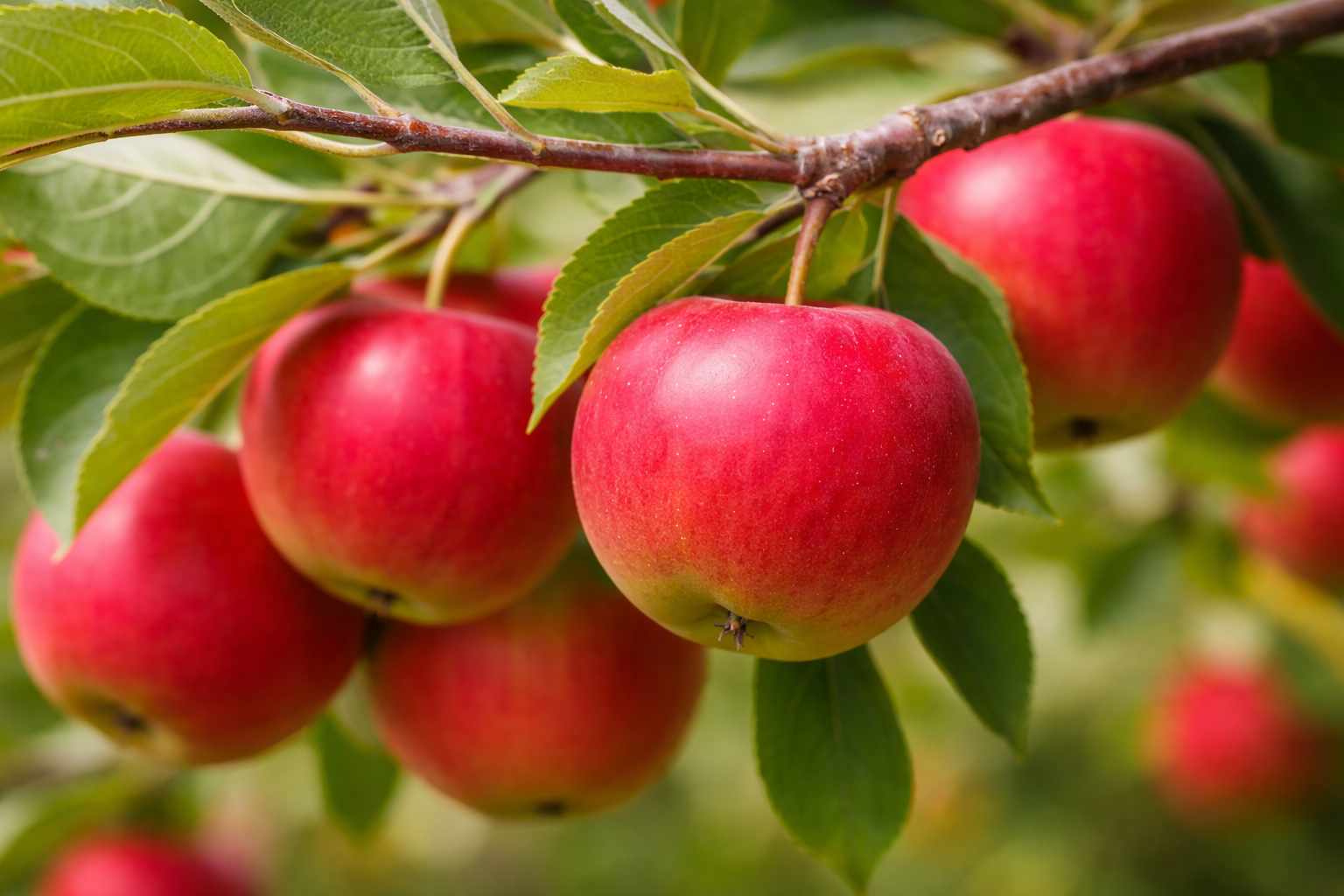
Give your trees a better chance
to produce this season.